
Take Science, Technology Seriously - Prof. Frimpong-Boateng
A former Minister for Environment, Science, Technology and Innovation, Prof. Kwabena Frimpong-Boateng, has underscored the need for African governments to take Science and Technology seriously in…
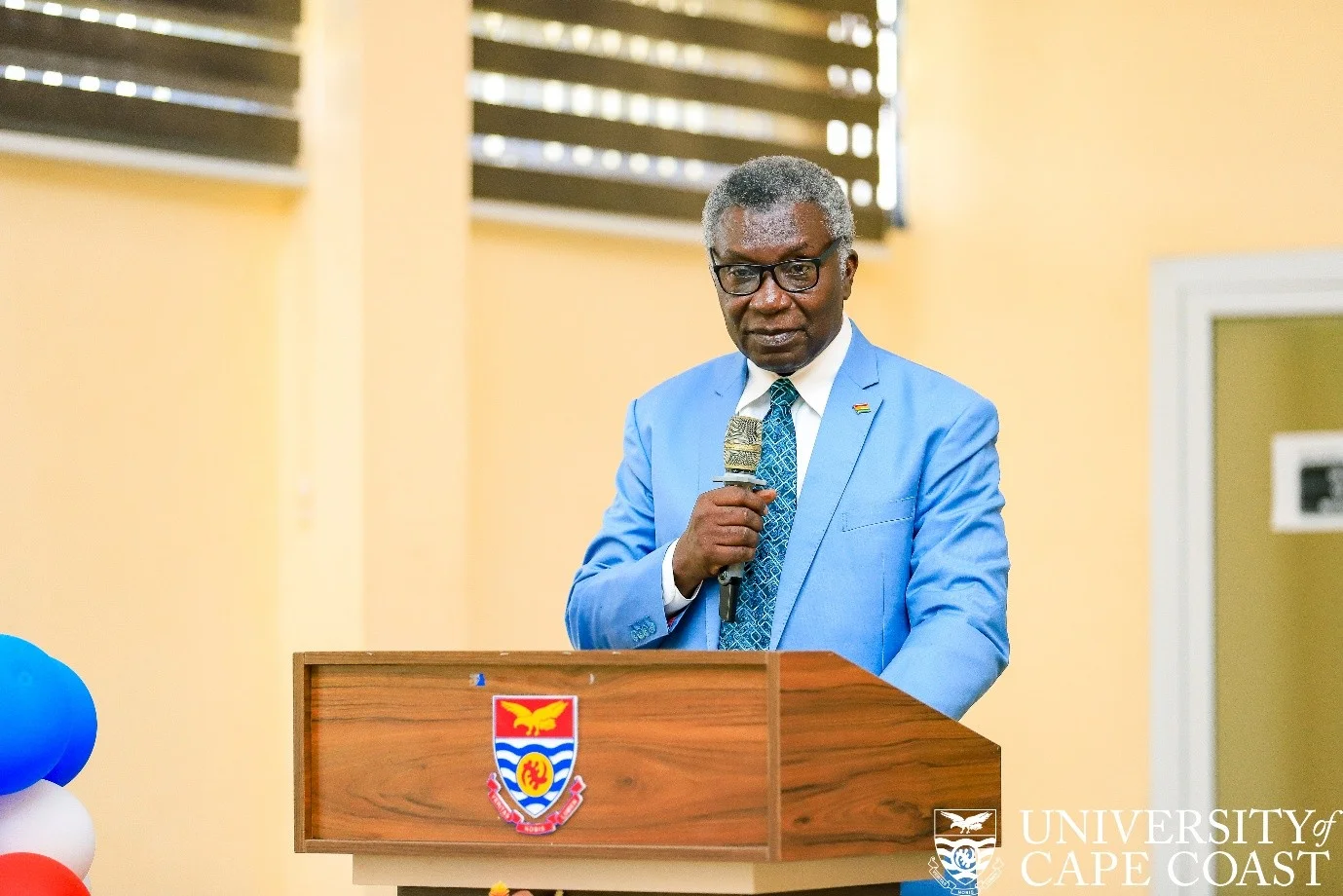
A former Minister for Environment, Science, Technology and Innovation, Prof. Kwabena Frimpong-Boateng, has underscored the need for African governments to take Science and Technology seriously in order not to lag in development.
He attributed the gap between rich and poor nations to the use of technology by farmers and said that if poor countries could invest more in technology, they would soon be at par with the rich and developed countries.
“If we want to develop like the developed countries, then the only way to go is science and technology. Our poverty gap is a technology gap, and we must address this urgently,” he said.
He said it was disappointing that even though Ghana, decades ago, set out on the path of using technology to advance its development, it was still grappling with challenges in the agricultural and other sectors of the economy.
To him, leveraging Science and Technology and mainstreaming research for development was the panacea for reversing this trend. He reiterated the fact that the real difference between developed countries and the underdeveloped ones in Africa was in their technological capacity.
Prof. Frimpong-Boateng made this observation at the official opening of the 10th Anniversary celebrations of the College of Agriculture and Natural Sciences (CANS) of the University of Cape Coast (UCC).
It was on the theme, "A decade of Excellence in Science, Technology and Agriculture: Honouring our Past, and Shaping the future."

Group photo of some participants
He challenged science and technology-oriented universities and research institutions to live up to their core mandate of using technology and introducing new methods to address key developmental challenges facing the country.
The former minister mentioned some of his achievements as the construction of a 400-kilowatt (KW) hybrid power plant at Atwima Nwabiagya in the Ashanti Region.
He described the W2E project as one that had a multiplier effect, since it created sustainable access to energy, while helping to tackle sanitation challenges, as well as providing fertilizer for agricultural purposes.
Prof. Frimpong-Boateng said he helped the government to establish the Science, Technology and Innovation (STI) Fund located at the Crops Research Institute (CRI) of the Council for Scientific and Industrial Research (CSRI), at Fumesua in the Ashanti Region.
Speaking on the topic, "Harnessing the Blue Economy: Accelerating Ghana's Developmental Goals for Sustainable Growth," A Research Fellow at the Centre for Coastal Management - Africa Centre of Excellence for Coastal Resilience (ACECoR), Dr. Rodrigue Pelebe, said the blue economy had great potential to contribute to higher and faster economic growth across Africa.

Dr. Rodrigue Pelebe
He indicated that Africa’s blue economy, including broadly the preservation of the continent’s oceans and the responsible and sustainable use of its resources through the fisheries, aquaculture, shipping, tourism, renewable energy and biotechnology industries, was an untapped treasure trove.
Blue economy is a term that refers to the sustainable use of coastal and marine natural resources for economic growth and improved livelihoods, and jobs.
Dr. Pelebe said the blue economy not only sought to promote economic growth but also to preserve the health and cleanliness of the ocean.
He added that the blue economy tenets, when pursued, would help achieve economic growth and economic development as well as attain the majority of the Sustainable Development Goals (SDGs). For instance, the blue economy calls for the prevention and reduction of marine pollution; and protect marine and coastal ecosystems and these will help to reduce climate-related events hence, building climate-resilient marine communities leading to the attainment of SDG 13 - climate change, SDG 14 - life below water, SDG 8, decent employment, and SDG 2, food security.
"Also, the blue economy calls for ensuring there is an end to overfishing and illegal fishing practices. These could help achieve SDG 2," he added.
The event was chaired by a former Provost of CANS, Prof. Samuel Yeboah Mensah.
Source: Documentation and Information Section-UCC
Last updated: August 29, 2026
Related News

UCC Shows Gratitude to Retirees
The University of Cape Coast (UCC) has honoured 38 retiring staff members after several years of service to the University.The retirees, who served the UCC between 10 and 42 years, were made up of 20…
UCC Faculty of Law Wins Maiden Ellen a. Awuletey Moot Court Competition
A delegation led by the Dean of the Faculty of Law, Mrs. Julia Selman Ayetey, has presented the Ellen A. Awuletey moot court competition trophy to the Provost of the College of Humanities and Legal…
